Top Tens Things – Scientists continue to uncover how animals in extreme cold develop remarkable adaptations to survive brutal subzero temperatures and icy landscapes.
Many animals in extreme cold face freezing winds, scarce food, and long periods of darkness. They must conserve energy and avoid losing body heat. Therefore, they evolve thick fur, insulating fat, and unique behaviors. These strategies help them hunt, breed, and move across snow and ice efficiently.
Some animals in extreme cold maintain a stable body temperature despite hostile conditions. Others allow parts of their body to cool or even freeze safely. On the other hand, a few species migrate, avoiding the coldest months entirely. Each strategy reflects a long evolutionary battle against winter.
Polar bears are perhaps the most iconic animals in extreme cold. Their dense underfur, oily guard hairs, and thick layer of fat trap precious heat. Even in icy water, they maintain body warmth. Powerful paws help them walk on thin ice and swim long distances between floes.
Their white coat camouflages them against snow and ice while hunting seals. In addition, dark skin beneath the fur absorbs solar radiation whenever sunlight appears. Females dig dens in snowdrifts to give birth, creating a naturally insulated shelter that shields tiny cubs from storms.
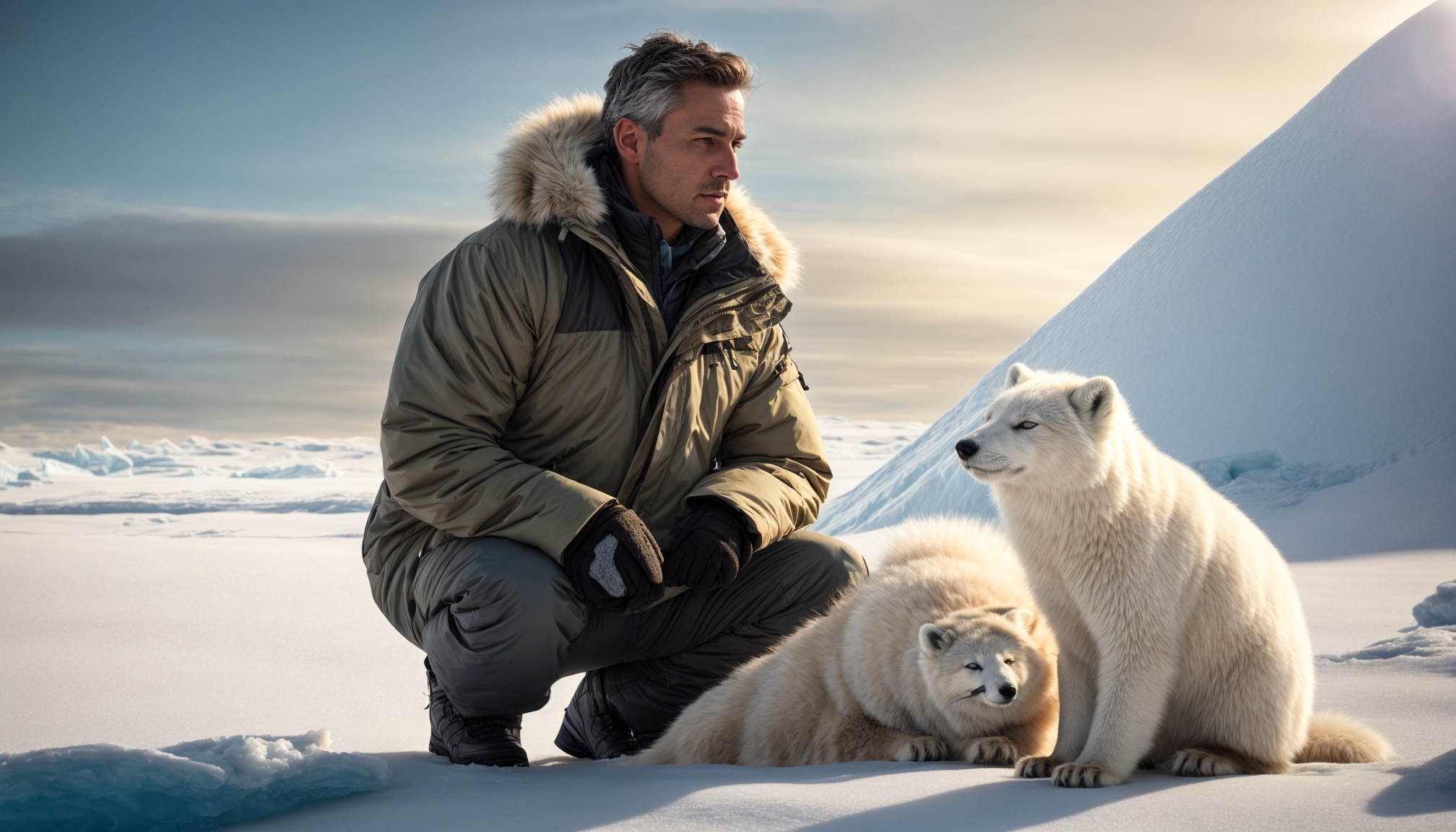
The Arctic fox is one of the small but tough animals in extreme cold. Its fur changes color with the seasons, white in winter and brown or gray in summer. This shift provides camouflage on snow and on rocky tundra. The fox’s compact body, short muzzle, and tiny ears reduce heat loss.
Arctic foxes wrap their fluffy tails around themselves like a blanket while resting. They also use keen hearing to locate prey hidden beneath snow. Meski begitu, they often scavenge leftovers from polar bears, taking advantage of any available calories.
Emperor penguins rank among the most resilient animals in extreme cold. They breed during the harsh Antarctic winter, when temperatures plummet and winds roar. Males incubate a single egg on their feet, protected beneath a fold of skin, while females return to the sea to feed.
To conserve heat, thousands of penguins huddle tightly together. Individuals constantly move from the cold outer edge to the warmer center. This teamwork allows the colony to survive conditions that would kill most other animals in extreme cold.
Musk oxen are heavy-bodied animals in extreme cold, roaming Arctic tundra in herds. Their outer coat is long and shaggy. Beneath it lies qiviut, one of the warmest natural fibers known. This underwool insulates them against freezing winds and blowing snow.
When threatened by predators, musk oxen form a defensive circle around calves. Their hooves break through ice to reach buried vegetation. Because of this, they can survive long winters on sparse tundra plants and lichens.
The Arctic hare is a fast-moving member of the animals in extreme cold. Its thick fur and compact body minimize heat loss. In winter, its coat turns brilliant white, blending perfectly with snow and confusing predators.
Arctic hares often gather in groups, sharing limited shelter and food. They dig shallow pits in the snow to escape wind. In addition, their powerful hind legs let them outrun many predators across icy terrain.
High in Central Asian mountains, snow leopards represent elegant animals in extreme cold. Their thick spotted fur, long tail, and powerful legs suit steep, rocky slopes. The tail acts as both a counterbalance and a warm scarf when wrapped around the body.
Snow leopards have wide, fur-covered paws that work like natural snowshoes. They stalk ibex and blue sheep, often hunting at dawn and dusk. However, their shy nature and remote habitat make them difficult for researchers to observe.
Reindeer, known as caribou in North America, are classic herd-based animals in extreme cold. They migrate vast distances between summer and winter ranges. Their hooves change seasonally, becoming sharper in winter to grip ice and packed snow.
Thick fur covers their entire body, including the muzzle. This adaptation warms the air before it enters the lungs. In addition, special nasal structures reclaim heat and moisture from exhaled breath, reducing overall energy loss.
The wood frog offers one of the strangest strategies among animals in extreme cold. During winter, it actually freezes. Ice forms in body spaces, and the heart stops beating. Yet the frog survives by flooding its cells with natural “antifreeze” sugars.
When temperatures rise, the frog thaws and resumes normal activity. As a result, it can live farther north than nearly any other amphibian. This ability challenges our usual idea of what it means to survive winter.
Deep in Southern Ocean waters, Antarctic icefish stand out as unique animals in extreme cold. Their blood lacks red blood cells, making it almost transparent. Specialized antifreeze proteins prevent ice crystals from forming inside their bodies.
These fish live in water that would kill most other species. Sementara itu, slow metabolisms and efficient gills help them function in cold, oxygen-rich seas. Their unusual physiology fascinates marine biologists studying extreme adaptation.
The snowy owl is another striking member of animals in extreme cold. Its thick plumage insulates against chilling winds. Feathered feet work like natural boots, shielding skin from snow and ice.
Snowy owls hunt lemmings and other small mammals by sight and sound. They remain active during long Arctic days and migrate south when prey becomes scarce. Because of this flexibility, they handle shifting seasons better than many strictly Arctic species.
Researchers study animals in extreme cold to understand physiology, evolution, and climate impacts. Their adaptations inspire new materials, medicines, and survival techniques. For example, antifreeze proteins may protect organs during transplant procedures.
Read More: How wild animals survive in the most extreme cold environments
Conservation efforts now focus on many animals in extreme cold as sea ice shrinks and temperatures rise. Habitat loss and changing prey patterns threaten species that once seemed perfectly adapted. After that, scientists monitor populations to detect early warning signs.
Public awareness also plays a major role. People support protective policies when they understand how animals in extreme cold shape entire ecosystems. Predators, herbivores, and scavengers maintain delicate Arctic and Antarctic food webs.
Ultimately, the resilience of animals in extreme cold reminds us that life can flourish in seemingly impossible conditions. However, their continued survival now depends on human decisions. By valuing animals in extreme cold, societies take a step toward safeguarding both biodiversity and the frozen regions that influence the global climate system.