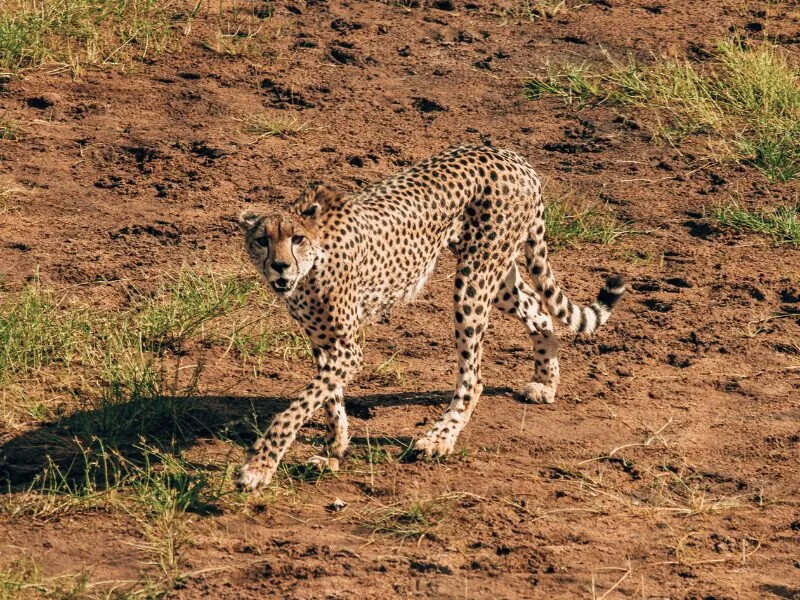
Top Ten Things – Nature’s speed demons dominate land, air, and sea with astonishing velocity. From cheetahs sprinting across savannas to birds diving through the skies, speed is often a matter of survival. While some creatures rely on raw muscle power, others depend on aerodynamic bodies. In both cases, speed becomes their greatest evolutionary advantage.
The cheetah is the undisputed champion of land speed. It can reach up to 100 km/h (62 mph) in just a few seconds. Because of its long legs, flexible spine, and large lungs, the cheetah accelerates rapidly. However, it can only maintain that pace briefly. After a short sprint, exhaustion sets in. Thus, it must time its attack perfectly.
“Read More: Treatment for Facial Skin to look Bright and Glowing, Understand Skincare Ingredients”
In contrast to the cheetah, the sailfish masters the ocean. It darts through the sea at up to 110 km/h (68 mph). Thanks to its sleek body and spear-like snout, it cuts through water effortlessly. Furthermore, its sudden bursts allow it to surprise prey and escape predators. As a result, few marine animals can match its speed or precision.
Among all creatures, the peregrine falcon holds the speed record. During a dive, it can reach a jaw-dropping 380 km/h (236 mph). Unlike other birds, it tucks its wings tightly to reduce air resistance. Therefore, its descent is smooth, sharp, and controlled. Once it spots prey, there’s little chance of escape. In essence, it’s a missile with feathers.
“Read About: Travel Therapy: 10 Wellness Destinations You’ll Love”
The pronghorn antelope stands out not only for its top speed—88 km/h (55 mph)—but also for its endurance. While cheetahs sprint, pronghorns sustain their pace over kilometers. This is because of their enlarged lungs and heart, which support extended runs. Consequently, predators find it difficult to keep up. Speed and stamina go hand in hand here.
Despite its small size, the dragonfly is a flying powerhouse. It zips through the air at 55 km/h (34 mph), and more impressively, it hovers, spins, and even reverses direction instantly. This is due to its two sets of wings that work independently. Moreover, it uses sharp vision to catch prey mid-air. In short, it’s nature’s aerial acrobat.
Top Ten Things - The average person now spends approximately 4 hours and 37 minutes daily staring at mobile screens,…
Top Ten Things - A comprehensive review of global conservation data indicates that while eco-friendly living is trending, the measurable…
Top Ten Things - Silicon Valley executives and productivity gurus are increasingly swearing by dopamine fasting, but our investigation reveals…
Top Ten Things - The global private aviation sector witnessed a 14% surge in flight departures in 2023, marking a…
Top Ten Things - Recent data from the World Health Organization reveals that nearly 1.4 billion adults are at risk…
Top Ten Things - A comprehensive analysis of global search engine data reveals a 300% surge in queries related to…